
Complete and Balanced Cat Food, What the Label Really Means
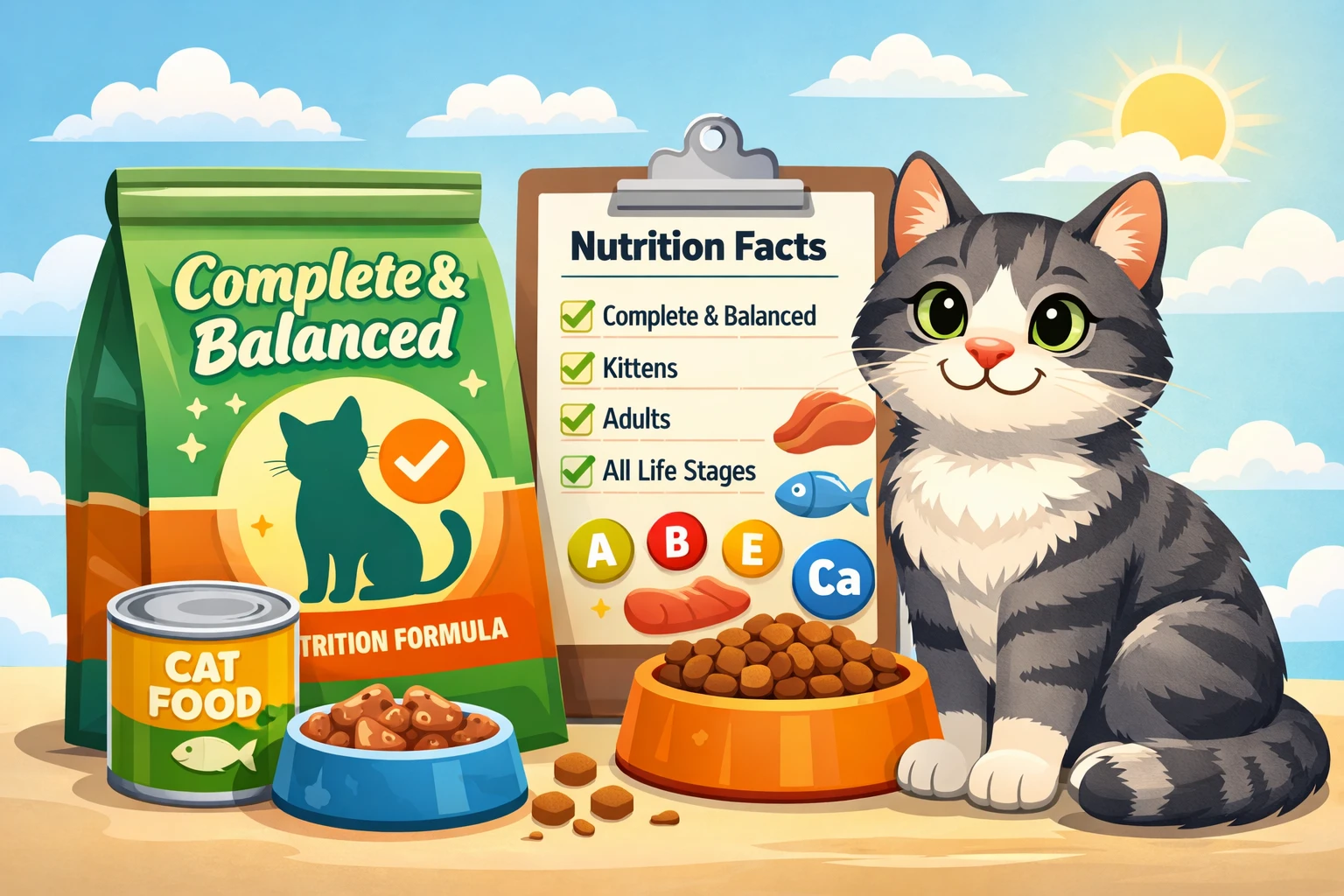
“Complete and balanced” sounds simple. Still, cat food labels can feel messy fast.
One bag says “all life stages.” Another says “adult maintenance.” A third looks premium, yet it calls itself a “supplemental” food.
So what does complete and balanced cat food really mean?
It means the food gives your cat all the required nutrients, in the right amounts, for a stated life stage. It is meant to be fed as the main diet. No extra vitamins. No guessing. No “filling in the gaps” with random toppers.
That label matters more than trendy ingredients, fancy marketing, or a pretty front-of-bag design.
What “Complete and Balanced” Cat Food Means
A cat food is complete and balanced when it meets established nutrition standards for cats, and it is intended to be fed as the main daily diet.
Depending on where you live, the label may reference:
- AAFCO (often seen on US labels)
- FEDIAF (often seen across Europe)
Different groups, same idea. The food must meet minimum nutrient levels, and it must stay within safe limits for key nutrients.
Cats have strict needs. They cannot “make up” missing nutrients in a meaningful way.
The One Line on the Label That Matters Most
If you want the quickest way to judge a cat food, find the nutritional adequacy statement.
It usually says the food is complete and balanced for one of these:
- Growth and reproduction (kittens, pregnant cats, nursing cats)
- Adult maintenance
- All life stages
Some foods mention feeding trials too. That can mean real-world testing happened, not just nutrient calculations.
If you cannot find an adequacy statement, treat the food like it is not proven as a full daily diet.
“All Life Stages” vs “Adult Maintenance”, Which Is Better?
All life stages foods meet higher nutrient targets. Kittens need more calories, protein, fat, and minerals to grow.
That sounds like a win for every cat, but it depends on your cat’s body and lifestyle.
- Kittens usually do great on all life stages food
- Active adults often do fine on it
- Indoor adults can gain weight faster on it
- Seniors may do better with a different balance, based on appetite and health
So the “best” one is the label that fits your cat right now.
Complete Diet vs Complementary Food (This Trick Gets a Lot of People)
Some products look like full meals, but they are not meant to be.
Watch for words like:
- “Complementary”
- “Supplemental feeding only”
- “Intended for intermittent or supplemental feeding”
These foods can be fine as toppers or occasional treats, but they are not built to cover every daily nutrient. When they become the main diet, problems can build slowly over time.
Treats matter too. A simple rule is to keep treats under about 10% of daily calories. That way the main food still does the heavy lifting.
What Cats Need in a Balanced Diet
Cats are obligate carnivores. Their bodies work best with animal-based nutrition and consistent nutrient intake.
A complete and balanced food should include the right levels of:
Protein (Top Priority)
Cats use protein as a main fuel source, not just for muscle. Low protein can show up as weight loss, low energy, and a dull coat.
Fat (Energy and Coat Support)
Fat gives calories and supports skin and coat health. It can help picky cats enjoy food more too.
Taurine (Non-Negotiable)
Taurine supports heart health, vision, and reproduction. Cats do not produce enough on their own.
A food that claims “complete and balanced” must include enough taurine.
Vitamins and Minerals (Small Amounts, Big Impact)
Calcium, phosphorus, zinc, iodine, copper, plus vitamins A, D, E, and B-complex. Cats need them in tight ranges.
Too little causes issues. Too much can cause issues too.
Water (Often Missed)
Cats often drink less than people expect. Moisture supports urinary health and digestion.
Wet food helps here, but dry food can work too if water intake stays strong.
Wet vs Dry, Which One Is “More Balanced”?
Both can be complete and balanced. The bigger differences are water content, calorie density, and cost per calorie.
Wet Food Pros
- More moisture in each meal
- Often easier for picky cats
- Can be helpful for cats prone to urinary issues
Wet Food Cons
- Usually costs more per calorie
- Spoils faster after opening
- “Dental benefits” are often exaggerated
Dry Food Pros
- Easy to store and measure
- Usually cheaper per calorie
- Convenient for busy schedules
Dry Food Cons
- Lower moisture intake
- Easy to overfeed since it is calorie-dense
- Some cats snack all day and gain weight
A lot of owners end up doing a mix. Wet food supports hydration. Dry food keeps things simple. Portions still matter most.
How to Read a Cat Food Label Without Getting Played
Ignore the front of the bag for a minute. Flip it over.
1) Find the Nutritional Adequacy Statement
Look for “complete and balanced” plus a life stage.
2) Check Calories Per Cup or Can
This drives weight gain more than most ingredient buzzwords.
Two foods can look similar, yet one can have 30% more calories per serving.
3) Use Guaranteed Analysis as a Quick Filter
It lists protein, fat, fiber, and moisture. It helps for comparisons, but it does not tell the full story.
Dry food will always look “low moisture.” That is normal.
4) Read Ingredients With the Right Mindset
Ingredients matter, but nutrient balance matters more.
Ingredient lists are sorted by weight before cooking. That means wet foods often list meats first partly from water weight.
Ask one simple question. Does the food clearly say it is complete and balanced for your cat’s life stage?
Cat Food Terms People Search (and What They Usually Mean)
“Grain-Free Cat Food”
Grain-free does not automatically mean low-carb. Many grain-free foods replace grains with peas, lentils, or potatoes.
Some cats do fine on grain-free diets. Others do better with grains included. Your cat’s digestion and body condition tell the truth.
“Limited Ingredient Diet”
These diets reduce ingredient variety, often for suspected sensitivities. The food still needs to be complete and balanced.
“Indoor Cat Formula”
These are often lower in calories and sometimes higher in fiber. That can help with weight control, but portions still decide the outcome.
“Hairball Control”
This usually means added fiber. It can help, but brushing and hydration still matter.
“High Protein Cat Food”
Nice claim, but confirm it with the label details. Some “high protein” diets still carry a lot of calories.
Raw Diets and Home-Cooked Meals, Worth It?
Some owners choose raw feeding or home cooking to control ingredients.
The main risk is imbalance.
Cats need exact levels of taurine, calcium, phosphorus, iodine, and several vitamins. Small mistakes add up. The food can look great and still fall short where it counts.
If you want to feed homemade long-term, work with a veterinary nutrition professional and use a cat-specific formula.
Feeding Amount, The Fastest Way to Improve Results
A great food can still fail if the portion size is off.
Start with the feeding guide, then adjust based on real life:
- You should feel ribs with light pressure, not see them sharply
- A waist should be visible from above
- Energy and stool should stay consistent
A kitchen scale helps more than guessing with a cup.
Watch the extras too. Treats, lickables, and human food add calories fast. For a simple safety list, read Foods Cats Should Never Eat.
Budget Matters More Than People Admit
Cat food choices are not just nutrition choices. They are household budget choices too.
If you want a clean way to plan spending without cutting corners, use the 50/30/20 Pet Budget Rule. It helps you balance food costs, vet care, and the less fun stuff like emergencies.
A steady, reliable complete and balanced food fed consistently often beats an expensive food fed on and off.
Quick Checklist, Choosing the Right Complete and Balanced Cat Food
Use this checklist in a store aisle:
- Find the nutritional adequacy statement
- Match the life stage to your cat
- Check calories per serving
- Pick a format your cat actually eats (wet, dry, mixed)
- Avoid “supplemental feeding only” as the main diet
- Track weight and stool for 2–4 weeks after switching
If your cat has vomiting, chronic diarrhea, sudden weight loss, or frequent urinary issues, treat that as a health signal. Food is only one piece of the puzzle.
Final Take
“Complete and balanced” is not just a nice phrase. It is a nutrition promise tied to a standard.
If you remember one rule, make it this. Pick a food with a clear adequacy statement for your cat’s life stage, then feed the right portion every day.
That keeps things stable, predictable, and healthy.