
Benefits of spearmint tea — what’s real, what’s hype, and what to expect
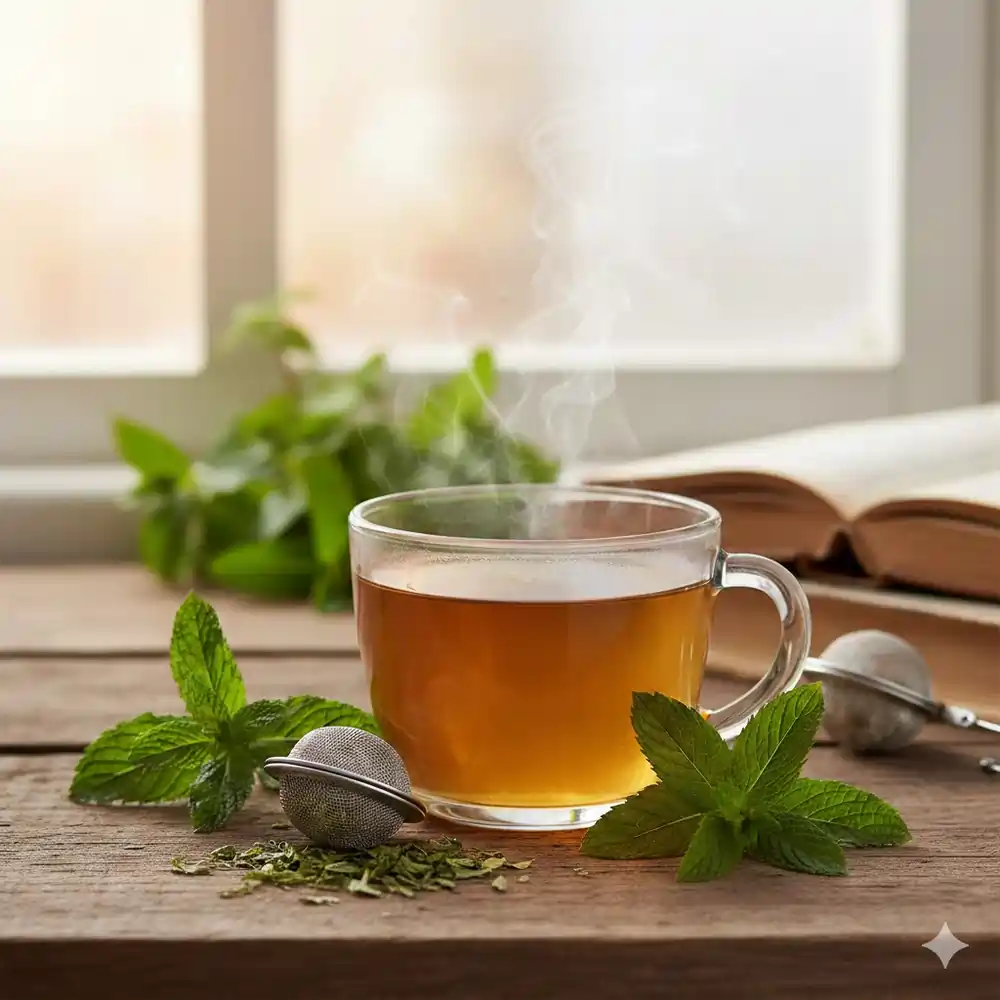
In this guide, Benefits of spearmint tea means practical, evidence-based outcomes you can reasonably expect from Mentha spicata as a drink. You’ll get the strongest human data, what the mechanisms suggest, and where claims go beyond the research.
Spearmint tea is popular because it’s flavorful and typically caffeine-free. At the same time, it sits at the intersection of “wellness tradition” and “clinical evidence,” especially around androgen-related outcomes in women. Two small human trials are often cited, and there’s now a recent meta-analysis pooling clinical trials.
What is spearmint tea?
Spearmint tea is an herbal infusion made from leaves of spearmint (Mentha spicata), a plant in the Lamiaceae (mint) family. It’s different from peppermint (Mentha × piperita). Spearmint’s essential oil is commonly dominated by carvone, while peppermint is known for menthol.
Because spearmint tea is an herbal infusion (not Camellia sinensis), it’s generally marketed as caffeine-free. Many commercial spearmint tea products label it that way.
Which compounds explain the “benefits” people talk about?
Spearmint contains a mix of volatile compounds (aroma) and polyphenols (plant antioxidants).
Key bioactive compounds
- Carvone (signature aroma compound in spearmint essential oil)
- Rosmarinic acid and derivatives (often major phenolics in spearmint extracts)
- Other polyphenols and volatiles vary by cultivar, drying, and brewing method
Why this matters: compounds can support plausible mechanisms (antioxidant activity, sensory effects, digestive comfort). But mechanism ≠ guaranteed clinical result.
What benefits have the strongest human evidence?
1) Hormone-related effects in women with hirsutism or PCOS features
The most cited human data involves spearmint tea and androgen-related markers.
- A randomized study in women with hirsutism reported changes in androgen-related measures after spearmint tea. (Phytotherapy Research, 2007) DOI: 10.1002/ptr.2074
- Another trial reported reductions in free and total testosterone and changes in gonadotropins over 30 days in a spearmint tea group. (Phytotherapy Research, 2010) DOI: 10.1002/ptr.2900
- A 2024 systematic review and meta-analysis of clinical trials concluded spearmint tea shows anti-androgenic signals in pooled data, while also highlighting the need for stronger, longer trials. DOI: 10.7762/cnr.2024.13.3.201
What to expect (realistic):
- Think “possible modest shifts in lab markers in specific groups,” not a guaranteed visible change.
- These trials were relatively small and short. That limits certainty.
2) Antioxidant intake (diet-quality benefit, not a medical claim)
Spearmint is rich in phenolics (including rosmarinic acid in many extracts). That supports the idea that spearmint tea can contribute plant antioxidants to the diet, similar to other herbs.
Practical benefit: swapping sweet drinks for unsweetened herbal tea reduces added sugar. That’s a real-world win, even if you ignore all “bioactive” claims.
3) Hydration and a caffeine-free routine
Many people use spearmint tea as an evening drink because it’s typically caffeine-free.
Benefit: it can help you build a consistent warm-drink routine without caffeine exposure.
What benefits are plausible but not strongly proven?
Digestive comfort and “after-meal” use
Mint teas are widely used for digestion comfort, bloating feelings, and after-meal heaviness in traditional practice. Spearmint has less direct clinical evidence than peppermint oil (which is more studied for IBS). Still, spearmint’s sensory effects and traditional use make “mild digestive comfort” a reasonable, low-stakes expectation.
If you’re reflux-prone: mint can be tricky (see safety section).
Oral freshness
Spearmint’s aroma compounds (including carvone) contribute to breath-freshening perception. This is a sensory effect more than a clinical endpoint, but it’s one reason spearmint tea stays popular.
Cognitive/alertness claims (mostly extract studies, not tea)
There are human trials on proprietary spearmint extracts and cognition. That does not equal “spearmint tea improves memory,” because extracts, doses, and measured outcomes differ.
How does spearmint tea compare to peppermint tea and green tea?
| Feature | Spearmint tea (Mentha spicata) | Peppermint tea (Mentha × piperita) | Green tea (Camellia sinensis) |
|---|---|---|---|
| Typical caffeine | Caffeine-free (herbal infusion) | Caffeine-free (herbal infusion) | Contains caffeine (true tea) |
| Signature compounds | Carvone; rosmarinic acid often prominent | Menthol (often) | Catechins (e.g., EGCG) |
| Best-known evidence lane | Androgen-related outcomes in small trials | GI comfort mainly via peppermint oil research (not tea) | Broad observational + clinical research base |
How to drink spearmint tea for practical results
Brewing basics (simple and repeatable)
- Use 1 tea bag or ~1–2 teaspoons dried spearmint leaf.
- Steep 5–10 minutes depending on taste.
- Drink unsweetened to keep it low-calorie.
Many brands suggest 1–3 cups daily as a routine, but your tolerance matters.
Timing tips
- After meals: for comfort and habit formation.
- Evening: if you want a caffeine-free warm drink.
Safety and who should be cautious
Spearmint tea is generally considered low risk in typical beverage amounts, but “herbal” still means bioactive.
Reflux and heartburn considerations
A controlled study found spearmint did not reduce lower esophageal sphincter (LES) pressure and did not increase acid reflux at flavoring doses, though high doses could cause symptoms likely from irritation (not reflux).
Separately, research on peppermint infusion suggests an association with GERD risk, with caution about cause vs behavior (people may drink peppermint tea to self-soothe symptoms).
Bottom line: if you get heartburn, start with small amounts and track symptoms.
Hormone-related caution
Because spearmint tea shows anti-androgenic signals in trials, be cautious if you:
- are pregnant or trying to conceive,
- use hormone-related medications,
- have an endocrine condition and want to add multiple cups daily.
The evidence base is not large enough to guarantee outcomes or safety in every group.
Allergy and sensitivity
Any mint-family herb can trigger sensitivity in some people. Stop use if you notice rash, itching, or swelling.
Checklist: choosing spearmint tea with less risk
- The label clearly lists Mentha spicata (not just “mint”).
- You start with 1 cup/day before moving to multiple cups.
- You avoid adding sugar or syrups.
- If you have reflux, you test tolerance and stop if symptoms worsen.
- If you’re targeting hormone-related outcomes, you treat tea as a supportive habit, not a primary solution, and you discuss changes with a clinician.
Why tea habits matter globally
- Global tea consumption has grown, reaching 6.5 million tonnes in 2022, according to a Food and Agriculture Organization of the United Nations market outlook report.
- A medical review notes tea is widely consumed worldwide (often described as second only to water).
These figures include many tea types, but they explain why “functional tea” content performs well: tea is a daily habit for huge populations.
Benefits of spearmint tea | FAQ
1) What are the benefits of spearmint tea?
Spearmint tea can support a caffeine-free routine, add polyphenols to your diet, and may modestly affect androgen-related markers in specific women based on small trials.
2) Does spearmint tea help with hormonal balance?
Human trials show anti-androgenic signals (e.g., changes in testosterone markers) in women with hirsutism-related profiles, but evidence is limited and not a guaranteed outcome. DOI: 10.1002/ptr.2074; 10.1002/ptr.2900.
3) How many cups of spearmint tea should I drink a day?
Many products suggest 1–3 cups daily, but start with 1 cup and adjust based on tolerance and goals.
4) Is spearmint tea safe if I have acid reflux?
A controlled study suggests spearmint doesn’t increase reflux via LES relaxation, but high doses may irritate. If you have GERD, test small amounts and stop if symptoms worsen.
5) Is spearmint tea caffeine-free?
Spearmint tea is an herbal infusion and is commonly labeled caffeine-free.
6) Spearmint vs peppermint tea: which is better?
Neither is “better” universally. Spearmint has the most cited hormone-related trial data; peppermint is better known for GI-related product research (often oil). Choose based on your goal and reflux sensitivity.
Glossary
- Mentha spicata — botanical name for spearmint.
- Lamiaceae — the mint plant family.
- Carvone — key aroma compound often dominant in spearmint essential oil.
- Rosmarinic acid — a major phenolic compound reported in spearmint extracts.
- Androgens — hormones like testosterone; often discussed in hirsutism/PCOS contexts.
- Hirsutism — excess terminal hair growth in a male-pattern distribution in women.
- PCOS — polycystic ovary syndrome; commonly linked with androgen-related symptoms.
- RCT — randomized controlled trial, a common clinical study design.
Benefits of spearmint tea | Conclusion
If you want a low-effort wellness habit, spearmint tea is a strong option: pleasant taste, usually caffeine-free, and some clinical signals in narrow hormone-related use cases. If you’re choosing a product, pick clearly labeled Mentha spicataand start with one cup a day.
Sources
- Akdoğan M, Tamer MN, Cüre E, et al. Effect of spearmint (Mentha spicata Labiatae) teas on androgen levels in women with hirsutism. Phytotherapy Research. 2007;21(5):444–447. DOI: 10.1002/ptr.2074. URL: pubmed.ncbi.nlm.nih.gov/17310494/
- Grant P. Spearmint herbal tea has significant anti-androgen effects in polycystic ovarian syndrome. Phytotherapy Research. 2010. DOI: 10.1002/ptr.2900. URL: onlinelibrary.wiley.com/doi/10.1002/ptr.2900
- Abbasi E, et al. Anti-androgenic properties of spearmint tea… A systematic review and meta-analysis of clinical trials. 2024. DOI: 10.7762/cnr.2024.13.3.201. URL: e-cnr.org/DOIx.php?id=10.7762/cnr.2024.13.3.201
- Sierra K, et al. Spearmint (Mentha spicata L.) Phytochemical Profile (review). 2022. URL: pmc.ncbi.nlm.nih.gov/articles/PMC9000270/
- Cirlini M, et al. Phenolic and Volatile Composition of a Dry Spearmint Extract. Molecules. 2016;21(8):1007. URL: mdpi.com/1420-3049/21/8/1007
- Bulat R, et al. Lack of effect of spearmint on lower oesophageal sphincter function and acid reflux. 1999. URL: pubmed.ncbi.nlm.nih.gov/10383511/
- Jarosz M, et al. Risk factors for gastroesophageal reflux disease… (peppermint infusion discussion). 2014. URL: pmc.ncbi.nlm.nih.gov/articles/PMC4223119/
- Food and Agriculture Organization of the United Nations. Current global market situation and medium-term outlook (tea consumption reaching 6.5 million tonnes in 2022). URL: openknowledge.fao.org/…
- Dou QP. Tea in Health and Disease (global consumption context). 2019. URL: pubmed.ncbi.nlm.nih.gov/31027187/


