
Cleavable vs Non-Cleavable Linkers: How to Match Biology With Chemistry
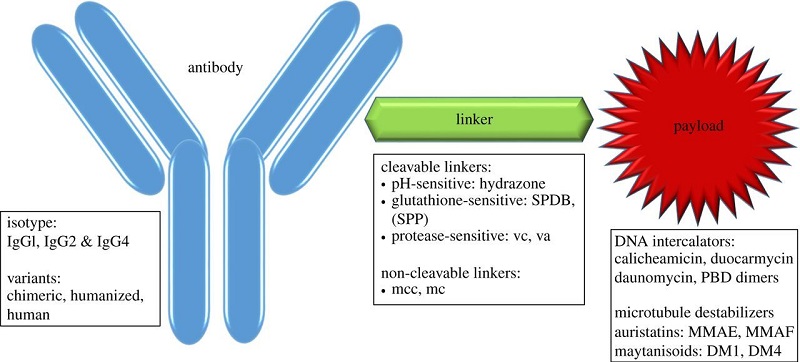
One of the most important ADC development decisions is whether to use a cleavable or non-cleavable linker. The answer should not be based on trend or preference alone. Sponsors need to understand how the linker will behave in plasma, within tumor tissue, and inside the target cell before committing to a final payload-linker architecture. It should be based on target internalization, payload mechanism, tumor heterogeneity, desired bystander effect, stability requirements, and manufacturability. A linker that performs well for one target-payload pair may be unsuitable for another.
A practical cleavable and non-cleavable linker strategy starts with biology. Cleavable linkers are selected to respond to biological triggers found within tumor cells or the tumor microenvironment. Protease-sensitive peptide linkers, acid-labile hydrazones, and disulfide-based systems can release payload molecules after internalization or under defined intracellular conditions. These linkers may be useful when bystander activity is desirable.
Non-cleavable linkers emphasize plasma stability and controlled payload exposure. Rather than releasing the free drug directly, they rely on lysosomal degradation of the antibody to generate an active payload-containing metabolite. This means target internalization and lysosomal trafficking are especially important. For a cleavable and non-cleavable linker strategy, sponsors should therefore evaluate cellular processing as carefully as payload potency.
An ADC linker selection framework should also consider CMC implications. Linker architecture must be compatible with conjugation chemistry, analytical characterization, stability studies, and scale-up. Cleavable systems may raise questions about premature release, while non-cleavable systems may raise questions about sufficient intracellular liberation. Both require rigorous testing to understand performance and risk.
ChemExpress supports linker chemistry, payload-linker synthesis, and conjugation-related development. For sponsors evaluating a cleavable and non-cleavable linker strategy, the most practical approach is to match biological release needs with chemistry, analytics, and manufacturing feasibility.
Teams comparing linker options can discuss target biology, payload class, conjugation method, stability testing, and scale-up needs with ChemExpress.


