
Construction Site Falls Are Still the #1 Killer in the Building Industry — Here’s Why
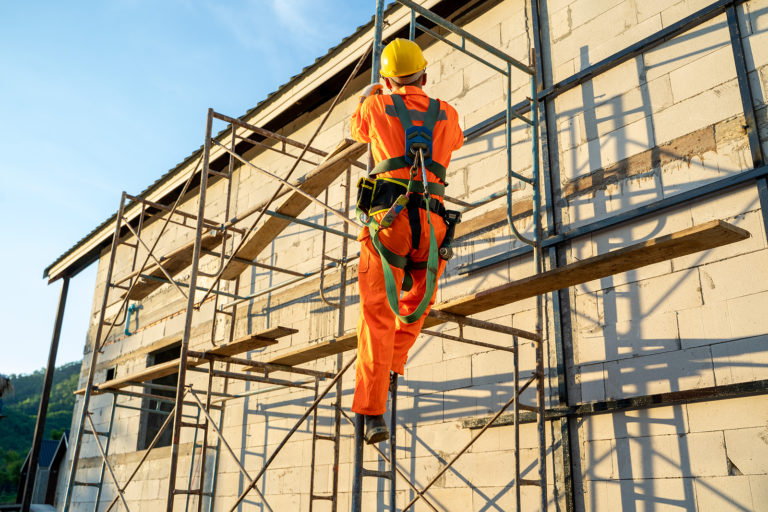
Every year, workers lace up their boots and head to job sites across America trusting that scaffolding is solid, harnesses are inspected, and fall arrest systems are in place. Too often, that trust is misplaced.
Falls have dominated construction fatality statistics for decades. Despite tighter regulations and billions spent on safety training, they remain the single leading cause of death in the building industry. In 2023, slips, trips, and falls claimed 421 construction worker lives, accounting for 39% of all construction fatalities that year, according to the Bureau of Labor Statistics (BLS).
Understanding why this problem persists starts with the framework federal regulators use to classify these deadly events.
What Is OSHA’s “Fatal Four” Framework?
The Occupational Safety and Health Administration (OSHA) developed the “Fatal Four” (also called the “Focus Four”) to identify the four hazard categories responsible for the majority of construction worker deaths:
- Falls (from roofs, scaffolding, ladders, and elevated surfaces)
- Struck-By (falling objects, vehicles, flying debris)
- Caught-In/Between (machinery entrapment, trench collapses, cave-ins)
- Electrocution (contact with power lines or improperly grounded equipment)
These four hazard categories accounted for more than 56% of all construction worker deaths in 2023, based on BLS data reported by OSHA’s Focus Four Campaign. Falls alone outpaced the other three combined in sheer volume of fatalities.
The troubling reality is that the industry has known about these hazards for a long time. So why are workers still dying at this rate?
Why Falls Keep Killing Construction Workers
The answer is systemic failure. A chain of responsibilities across general contractors, subcontractors, equipment suppliers, and site owners routinely breaks down before a single worker sets foot on the job.
Key data points illustrate the scale of the problem:
- 421 construction workers died from fall-related injuries in 2023 (BLS / National Safety Council Injury Facts)
- Fall Protection (29 CFR 1926.501) was the most frequently cited OSHA standard in FY2024 for the 14th consecutive year (OSHA)
- OSHA issued 6,557 citations for fall protection violations in FY2024, totaling over $48 million in penalties
- Falls from heights between 6 and 30 feet caused 260 deaths in 2023-2024 — a reminder that workers do not need to fall from great heights to die
Federal OSHA investigations of fatal falls dropped nearly 20% in FY2024 (from 234 to 189), which is encouraging. But one in five American workplace deaths still happens in construction. Progress is real; so is the gap between where the industry stands and where it needs to be.
The Subcontractor Chain: Where Safety Breaks Down
Modern construction projects rarely involve a single employer. A general contractor may hire a framing crew, a roofing team, an electrical subcontractor, and a scaffolding company — all operating on the same site simultaneously. Each brings its own safety culture, supervision, and compliance track record.
This layered structure creates specific failure points that investigators find repeatedly after serious construction falls.
1. Missed Harness Inspections
Personal fall arrest systems, including full-body harnesses, lanyards, and anchor points, are only effective when properly inspected before each use. OSHA requires a competent person to conduct these inspections. In practice, subcontractors under production pressure often skip the process. A frayed lanyard or corroded anchor point can fail under load, and a failed harness at 20 feet is functionally no different from no harness at all.
2. Improper Scaffolding Assembly
Scaffolding violations appear consistently in OSHA’s top 10 most cited standards. Subcontractors sometimes assemble scaffolding without a qualified person overseeing the process or allow workers to use components damaged in transport. Under OSHA 29 CFR 1926.451, scaffolding must support four times its maximum intended load. A scaffold built by an under-trained crew may never have met that standard.
3. Absent Fall Arrest Systems
OSHA’s fall protection standard (29 CFR 1926 Subpart M) requires fall protection at any elevation of six feet or higher. Yet fall arrest systems are frequently absent at handoff points between trades. When one subcontractor finishes framing and another begins roofing, safety controls established by the first crew may be removed without replacements being installed, leaving the incoming crew working unprotected.
When Workers’ Comp Is Not Enough
Workers’ compensation is a no-fault system that pays medical benefits and a portion of lost wages without requiring proof of negligence. That accessibility has real value immediately after an injury.
But workers’ comp has documented limits:
| What Workers’ Comp Covers | What Workers’ Comp Does NOT Cover |
| Medical treatment costs | Pain and suffering |
| Partial lost wages | Full future earning capacity |
| Permanent impairment benefits | Emotional distress |
| Rehabilitation costs | Loss of enjoyment of life |
For a worker who suffers a spinal fracture from a scaffolding collapse and faces a lifetime of limited mobility, the uncovered categories represent some of the most serious losses they will ever experience. Workers’ comp was not designed to address them.
This is where third-party construction claims become critical.
What Is a Third-Party Construction Claim?
Workers’ comp rules generally prevent employees from suing their own employer for a job-site injury. But those rules do not protect every party on a construction site.
A third-party claim is a personal injury lawsuit filed against a company or individual other than your direct employer whose negligence contributed to your injury. On a multi-subcontractor site, potential third parties include:
- The general contractor, if they failed to enforce site-wide safety standards or ignored known fall hazards
- A separate subcontractor, whose crew left an unguarded edge or removed fall protection without replacing it
- Equipment manufacturers or rental companies, if a defective harness, ladder, or scaffold component failed during use
- Property owners, who knew about dangerous site conditions and failed to address them
A construction workplace injury involving multiple trades is frequently eligible for third-party legal action. The key is identifying which party beyond your employer created or ignored the hazard that caused your fall.
FAQ
Why are falls the leading cause of death in construction?
Falls dominate because the work involves constant elevation, constantly changing conditions, and multiple parties sharing responsibility for safety controls. When one link in that chain fails — an uninspected harness, improperly anchored scaffold, or unguarded edge — the consequences are often fatal.
Can a construction worker sue a subcontractor for a fall injury?
Yes. If the fall was caused or contributed to by a subcontractor other than the worker’s direct employer, a third-party personal injury lawsuit may be filed against that subcontractor. This allows recovery for damages that workers’ compensation does not cover, including pain and suffering and full lost earning capacity.
What is the difference between workers’ comp and a third-party claim?
Workers’ comp is a no-fault system that pays limited benefits regardless of who caused the injury. A third-party claim requires proving negligence by someone outside the employer-employee relationship, but it opens access to the full range of civil damages — including non-economic losses workers’ comp never touches.
Bridging the Gap: Workers’ Comp and Third-Party Claims Together
Workers’ comp and a third-party construction claim can proceed in parallel. If a third-party lawsuit succeeds, the workers’ compensation carrier typically holds a lien on the settlement, meaning they may be reimbursed for benefits already paid. An experienced attorney helps structure settlements to maximize the worker’s net recovery after satisfying those liens.
Key steps after a serious construction fall:
- Document the scene with photographs, witness names, and equipment identification
- Report the injury to your employer to preserve workers’ comp eligibility
- Request OSHA inspection records for the site
- Preserve physical evidence — damaged harnesses and scaffold components should not be discarded
- Consult an attorney before accepting any settlement, as early offers frequently undervalue serious injuries
Time limits matter. Most states allow two years from the date of the accident to file a personal injury lawsuit against a third party. Waiting weakens evidence and reduces options.
Conclusion
Falls are not disappearing from construction sites on their own. OSHA’s Fatal Four framework has been in place for decades, and the industry still loses hundreds of workers every year to preventable incidents rooted in subcontractor chain failures, skipped inspections, and absent fall protection systems.
For workers facing the aftermath of a serious fall, understanding the limits of workers’ compensation and the availability of third-party claims can make the difference between a settlement that barely covers medical bills and one that reflects the full scope of what was lost.
The regulations exist. The legal tools exist. The question is whether injured workers know how to use them.
