
How Seamless Systems Change the Gutter Installation Process in Trussville AL
Post Preview
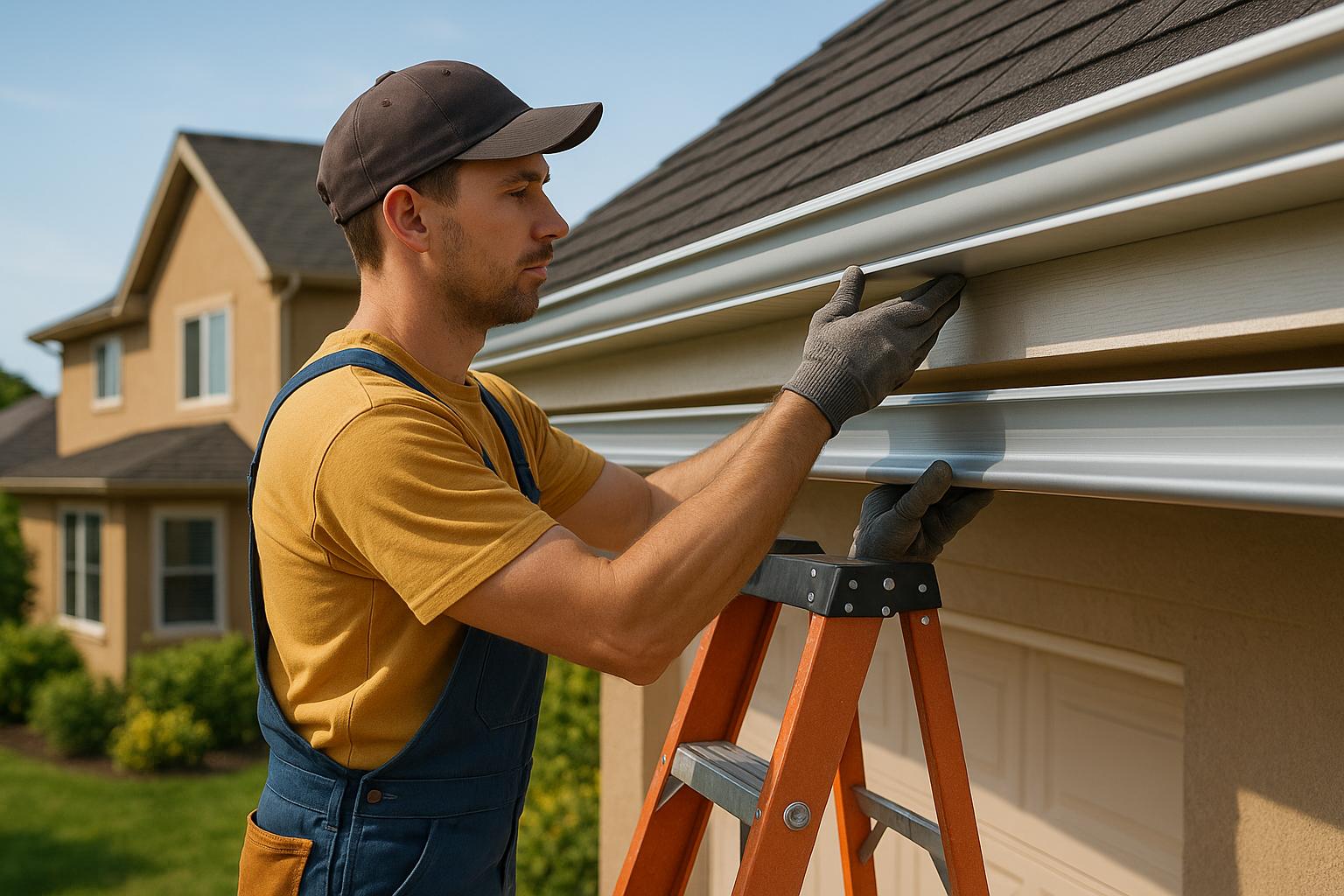
Seamless gutters change more than the finished look of a home; they also change how crews measure, form, and install each run. Custom fabrication lets installers build long sections that fit the roofline instead of joining many short pieces together. Better planning during gutter installation in Trussville AL can mean fewer leaks, cleaner lines, and more dependable drainage during heavy Alabama rain.
Continuous Runs Reduce the Number of Field Seams
Traditional sectional gutters rely on several connected pieces along a long eave. Each connection needs sealant and fasteners, creating another place where movement, temperature changes, or aging materials could eventually allow water through.
Seamless systems use one continuous piece across much of the roof edge, leaving joints mainly at corners and other necessary transitions. Fewer connections give roof contractors less sealing work to maintain while creating a smoother path for water moving toward the downspouts.
On-Site Forming Matches Gutters to Exact Eave Lengths
Portable forming machines allow crews to create gutters directly at the property. Measurements taken from each eave guide the machine, which shapes flat aluminum coil into a continuous gutter cut to the required length.
Custom sizing eliminates the need to force standard store-bought sections into a roofline that may be slightly longer or shorter. Homeowners searching for gutter installation near me often benefit from this approach because each run is made specifically for the house instead of adapted from preset lengths.
Fewer Joints Lower the Risk of Mid-Run Leakage
Joints naturally experience stress as gutter metal expands during hot afternoons and contracts when temperatures fall. Repeated movement can weaken old sealant, loosen connections, or open tiny gaps where rain begins dripping onto fascia and siding.
Reducing mid-run seams removes many of those potential failure points before they ever become a maintenance problem. Experienced roof contractors in Trussville AL still seal corners and outlets carefully, but the long straight sections remain free of unnecessary joints.
Custom Cuts Improve Fit Around Corners and Roof Transitions
Corners, roof valleys, additions, and changing eave directions require accurate cuts for the system to look clean and drain correctly. Poorly fitted angles can leave oversized gaps that depend too heavily on sealant to stay watertight.
Precise fabrication lets a roofer shape each transition around the actual dimensions of the house. Skilled workmanship becomes especially important where large roof sections meet, since those locations may send a strong rush of stormwater into a relatively small gutter area.
Hanger Placement Can Be Set for Longer Unbroken Sections
Hidden hangers support seamless gutters from inside the trough and attach the system firmly to the fascia. Proper spacing keeps long aluminum runs from sagging once rainwater, leaves, and wet debris add weight.
Consistent support also helps preserve the intended pitch from one end of the gutter to the other. Reliable roof companies near me should inspect fascia strength before fastening anything, because even the best gutter cannot stay straight when attached to soft or rotted wood.
Outlet Locations Are Planned Before Each Run Is Formed
Downspout placement needs to be decided early because outlets determine where water leaves each seamless run. Roof area, slope, valleys, landscaping, foundation conditions, and nearby walkways can all affect where an outlet belongs.
Careful planning prevents crews from cutting openings in poor locations after the gutter has already been installed. People researching roofing near me can ask whether the contractor calculates drainage needs before forming each section rather than simply placing downspouts at the nearest corner.
Installation Moves Faster With Premeasured Seamless Sections
Accurate preparation can make installation more efficient because each formed section arrives at the roofline ready for positioning and fastening. Crews spend less time joining several small pieces or repeatedly sealing connections across long eaves.
Efficient work does not mean rushing through alignment, hanger placement, or water testing. A Trussville roofer still needs to verify pitch, secure outlets, check drip-edge alignment, and confirm that runoff reaches every downspout without pooling.
Long seamless sections can also create a cleaner exterior because there are fewer visible joints breaking up the roofline. Straight runs tend to look more finished against siding, brick, fascia, and trim, especially on homes with broad front elevations.
Proper handling matters during installation because lengthy aluminum pieces can bend if crews lift or position them carelessly. Trained roof contractors use enough workers to support the section evenly while moving it into place, helping the finished gutter retain its intended shape.
Weather planning remains part of the process as well. Dry conditions make it easier to inspect fascia, apply sealants at necessary joints, and test how the new gutter sits beneath the roof edge before heavy rainfall arrives.
For Trussville homeowners considering seamless gutters, Yellow Hammer Roofing can tailor the system to the roof size, runoff flow, fascia condition, downspout layout, and exterior style. Their team forms custom sections on site and installs them with the proper slope and support to carry stormwater away from the home efficiently.


